

Beta Waves: Understanding Their Role in Focus and Concentration
The focus largely relies on beta wave activity—electrical brain signals oscillating between 13 and 30 Hz. These waves help maintain attention, filter out distractions, and sustain concentration on complex tasks. They also regulate alertness, rapid decision-making, and responsiveness to new information. Understanding how they function explains why some individuals naturally remain focused for longer periods, […]


The focus largely relies on beta wave activity—electrical brain signals oscillating between 13 and 30 Hz. These waves help maintain attention, filter out distractions, and sustain concentration on complex tasks. They also regulate alertness, rapid decision-making, and responsiveness to new information.
Understanding how they function explains why some individuals naturally remain focused for longer periods, while others need to adopt specific strategies to improve their focus.
The concrete effects of beta waves on focus
Beta wave activity directly contributes to cognitive functions related to attention. The brain can then process information efficiently and maintain a stable level of alertness.
In practical terms, beta waves allow you to:
- Filter distractions: by facilitating the selection of relevant information and limiting the impact of irrelevant stimuli. This mechanism improves the ability to work in stimulating environments, such as open spaces or multitasking situations.
- Maintain concentration on complex tasks: and support mental engagement in demanding activities, particularly those involving analysis, writing, or problem-solving that require sustained attention.
- React quickly: by enhancing the speed of information processing. Beta waves help adapt behavior rapidly in response to new situations and facilitate decision-making.
- Support working memory: by contributing to the temporary retention of information useful for a task. This function is essential for planning, organizing, and learning effectively.
These concrete functions are at the core of current strategies to improve mental performance, combining an understanding of brain function with methods to enhance focus and attention.
Techniques and methods to regulate beta waves
Beta wave activity can be modulated by various physiological and environmental factors. Their regulation relies on a combination of natural methods and specific tools.
Natural methods
Certain habits promote a level of brain activation compatible with stable attention:
- Regular physical activity stimulates neurotransmitters involved in attention, particularly dopamine and norepinephrine. It also improves cerebral blood circulation.
- Quality sleep stabilizes brain rhythms and supports cognitive recovery and mental availability.
- Active and mindfulness meditation enhance the ability to deliberately direct attention, reduce mental distraction, and improve attentional control.
- Rhythmic music or binaural sounds provide auditory stimulation that can support alertness.
Technological methods
Specific tools can directly influence brain activity:
- Neurofeedback and qEEG: techniques based on real-time measurement of brain activity that allow the brain to be trained to produce more stable wave patterns, particularly in the beta range.
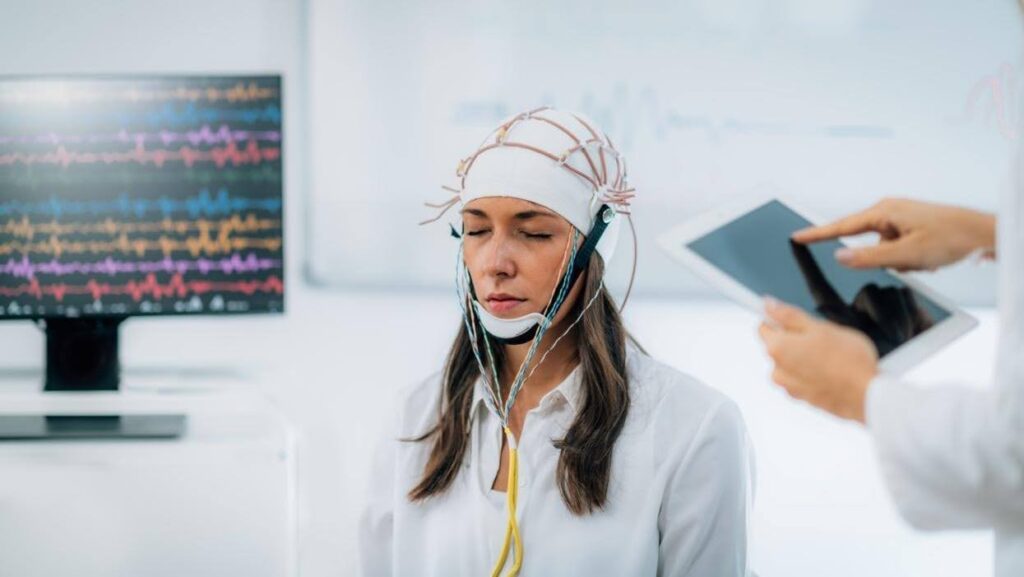
These approaches are used in clinical or cognitive performance contexts and require appropriate supervision to ensure effectiveness.
Practical recommendations
Effectiveness depends on an individualized approach:
- combine natural and technological methods according to personal needs,
- create a stimulating yet controlled environment,
- adjust stimulation levels to avoid mental overload,
- maintain consistent routines to stabilize attention.
Individual variability and factors influencing beta waves
Beta wave activity varies from one individual to another. This fluctuation depends on neurobiological factors, as well as environment and lifestyle habits.
Some individuals naturally exhibit more stable beta activity, making prolonged concentration easier. Others may experience more pronounced fluctuations, with irregular attention phases. This difference explains why focus management strategies do not produce the same effects for everyone.
Several factors directly influence this brain activity:
Stress level
Moderate stress can enhance alertness. However, chronic stress tends to disrupt brain activity and impair concentration.
Cognitive load
Excessive accumulation of information can overload working memory and reduce attentional efficiency.
Sensory environment
Noise, lighting, and visual stimuli affect the ability to maintain stable attention.
Overall lifestyle
Diet, physical activity, and sleep patterns contribute to the balance of cognitive functions.
Identifying these factors allows for more targeted strategy adjustments. A personalized approach is essential for sustainably supporting attentional functioning.
Thus, regulating beta waves does not rely on a single solution, but on a set of gradual adjustments tailored to each individual’s specific needs.
Tangible benefits of optimal focus
Better regulation of beta waves may lead to observable improvements in cognitive functioning, depending on individuals and contexts:
- Sustained concentration: ability to stay focused on long or demanding tasks,
- Effective distraction management: improved filtering of irrelevant information,
- Increased productivity: faster and more efficient execution of daily tasks,
- Responsiveness and decision-making: improved mental reflexes and adaptability,
- Practical application: beneficial for professionals, students, and athletes.
These benefits apply to several profiles:
- professionals working in demanding environments,
- students requiring sustained attention,
- athletes who need to maintain a high level of alertness.
Conclusion
Beta waves play a central role in concentration, alertness, and responsiveness. Their regulation—whether natural or through complementary approaches such as neurofeedback—can support attentional functioning in daily life, although results vary between individuals. Understanding how they work and integrating them into daily routines is a gradual process tailored to each profile.
At Neuroperforma, neurofeedback sessions are conducted under the professional supervision of a psychologist who is a member of the Ordre des psychologues du Québec (OPQ). Receipts recognized by private insurers may be issued under the title “psychologist”—we encourage you to verify your coverage with your insurer.


